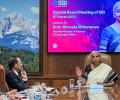
Finance Minister Nirmala Sitharaman on Saturday said India is looking for a "good" trade agreement with the US to promote economic growth and ensure smooth supply chains. She also said that amid a growing global tariff war, India will have to move "smartly" to guard against possible dumping of goods from countries that are facing higher US tariffs.

More than 40 new product launches are expected at the upcoming Auto Expo which will be held under the umbrella of Bharat Mobility Global Expo 2025 from January 17-22, a government official said on Tuesday. With visas continuing to be an issue, large scale participation of Chinese companies are unlikely although some of them are participating at the expo, Joint Secretary at Ministry of Commerce and Industry Vimal Anand said at the sidelines of curtain raiser of 'Bharat Battery Show' which will also be a part of the Bharat Mobility Global Expo 2025.

The commerce ministry has proposed a three-year extension of tax benefits given to Export-oriented Units in an attempt to encourage export industries at a time when global demand is expected to slump further.
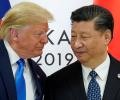
In a statement, the Chinese ministry of commerce said that it would file a lawsuit with the World Trade Organisation against the US for its "wrongful practice," the Global Times reported.
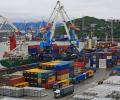
eclined for the third month in a row in January, falling by 2.38 per cent year-on-year to $36.43 billion, while the trade deficit widened to $22.99 billion in the month. Imports rose by 10.28 per cent year-on-year to $59.42 billion in January due to an increase gold shipments, according to the Commerce Ministry data. The trade deficit was $21.94 billion in December and $16.55 billion in January last year.
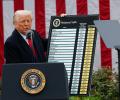
The official said there are both challenges and opportunities for India as many of its competitor countries in exports, such as China Vietnam, Bangladesh, Cambodia and Thailand, face higher duties.

This will be the first full-year Budget of the BJP-led National Democratic Alliance government since it came to power for a third consecutive term in July last year.

The department of personnel and training has asked the Union Public Service Commission to recruit such specialists through "lateral entry" mode in 12 government departments/ministries, he said.

Wholesale price inflation marginally rose to 2.38 per cent in February due to expensive manufactured food items like vegetables oil and beverages, government data released on Monday showed. The Wholesale Price Index (WPI) based inflation was 2.31 per cent in January. It was 0.2 per cent in February 2024.
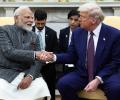
No one should make China an issue in their bilateral relations and their cooperation should not harm the interests of another country, the Chinese Foreign Ministry said on Friday reacting to queries on the meeting between Prime Minister Narendra Modi and United States President Trump.

The "construct of the DPDP Act" cannot be changed at this stage, though there may be some minor tweaks in the language of the Rules and formats in certain legitimate cases.

The government has revised gold import data, bringing down numbers for November by $5 billion to $9.84 billion, possibly to rectify double accounting of inbound shipments. According to revised data of the commerce ministry arm Directorate General of Commercial Intelligence and Statistics (DGCIS), gold import numbers have been slashed since April 2024, revealing excess imports of about $11.7 billion during the first eight months of 2024-25.

Among key guidelines, the e-commerce companies will also be required to ensure that personally identifiable information of customers are protected.
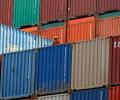
India's exports declined for the fourth month in a row in February to $36.91 billion due to volatility in petroleum prices and global uncertainties. The country's exports stood at $41.41 billion in the same month a year ago.

The proposed policy is increasingly becoming an item of negotiation, as the US pushes hard to change India's stance.
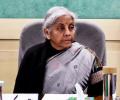
The finance minister, in her Budget speech, should focus more on what she is directly responsible for, rather than on programmes where her role is largely supportive, notes Nitin Desai.

Fast-moving consumer goods (FMCG) distributors' association has written to the Ministry of Commerce and Industry, expressing its apprehensions that the "unchecked expansion" of quick commerce platforms was leading to severe disruptions in the retail ecosystem. India Consumer Products Distributors Federation on Thursday shot an email to the government, saying that significant challenges were posed by the rapid growth of quick commerce platforms such as Blinkit, Zepto and Instamart to the traditional retail sector and the FMCG distribution network in the country.

Various industry bodies have sought immediate government intervention through the imposition of anti-dumping duties, claiming India has seen a surge in imports of Chinese goods over the past two weeks.

India and the United States will finalize the contours, schedule of negotiations, and terms of reference for a proposed bilateral trade agreement (BTA) during a three-day meeting beginning Tuesday. The agreement is expected to be finalized in two tranches, with the first phase focusing on goods trade. The US team, led by Assistant US Trade Representative for South and Central Asia Brendan Lynch, will be in India from March 25-29 to discuss the agreement. Both countries are aiming to conclude the first phase of the agreement by fall 2025.
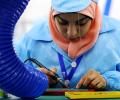
In 2023, the share of US electronics imports from India was a mere 1.9 per cent of the $520 billion they imported, while the total Indian electronics exports to the US was pegged at only $10 billion.

Brendan Lynch, the assistant US trade representative for South and Central Asia, will pay a five-day visit to India beginning Tuesday, days before US President Donald Trump's tit-for-tat tariff kicks in. The senior US trade official is expected to hold talks with Commerce Minister Piyush Goyal besides meeting a number of senior Indian officials.
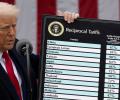
US President Donald Trump has proposed a deal to China that would see the sale of TikTok's US operations to an American buyer in exchange for a reduction in tariffs on Chinese exports to the US. The proposal comes amid a trade war between the two countries and follows China's retaliation of Trump's tariffs on Chinese goods. Trump has also said that tariffs are a powerful economic tool and that he is determined to ensure fair trade between the US and China.
United States President Donald Trump on Sunday criticised the trade deficits that the US has with Canada, Mexico, China, and argued that America should no longer 'subsidise' other countries, and urged businesses to manufacture domestically to avoid tariffs.

The government's initiative to migrate SEZ data from NSDL software to ICEGATE system for streamlined reporting of import data caused double counting of gold imports, resulting in inflated figures and the issue has now been largely rectified, government sources said. The downward revision has provided the actual picture of trade deficit (difference between imports and exports), which was earlier looking very high. The deficit for November will now be revised downwards from $37.84 billion to about $32.8 billion. Similarly, there will be a revision in overall import numbers as well.

Seasoned bureaucrat and a stickler for rules Finance Secretary Tuhin Kanta Pandey will be at the helm of capital market regulator, Securities and Exchange Board of India (SEBI), for three years. The 1987-batch Odisha-cadre Indian Administrative Service (IAS) officer, Pandey, would replace Madhabi Puri Buch, whose three-year term ends on Friday.
The "weaponisation" of economic activity - through tariffs and sanctions - is now a reality, with countries leveraging these tools strategically, External Affairs Minister S Jaishankar said at the Raisina Dialogue recently.

Companies have been approached to set up incubation centres that will offer financial and non-financial support to manufacturing startups at various levels.

US shale oil would act as an alternative to India's heavy dependency on Russian crude, which is currently facing sanctions.

Farmer representatives and agricultural stakeholders urged the government to provide cheaper long-term credit, implement lower taxes, and double the PM-KISAN income support during a comprehensive pre-budget consultation with Finance Minister Nirmala Sitharaman on Saturday. The two-hour meeting saw a detailed discussion of proposals, aimed at addressing multiple challenges in the agricultural sector, with key demands focusing on financial relief, market reforms, and strategic investments.

As many as 81 per cent people support having rules for consumer e-commerce, but want more services-based platforms to have more clearly defined roles, a survey by community social media platform LocalCircles has found. The survey asked respondents to answer questions based on the recent draft Rules proposed by the ministry of consumer affairs. The responses found 81 per cent consumers wanting sales of products and services over electronic or digital networks to be governed by a set of electronic commerce rules.

India on Monday imposed a 12 per cent provisional safeguard duty for 200 days on five steel product categories, including hot rolled coils, sheets and plates, to protect domestic players from surge in imports. The decision follows a recommendation for the same by the Commerce Ministry's investigation arm DGTR. Last month, the DGTR suggested to impose the duty.
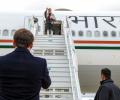
Prime Minister Narendra Modi has concluded his visit to France, which included co-chairing an AI summit and bilateral talks with French President Emmanuel Macron. He is now headed to the US for a bilateral meeting with President Trump. Modi's visit to France included discussions on trade, defense, energy, and cultural linkages. He also inaugurated India's new consulate in Marseille. During his visit to the US, Modi will also interact with business leaders and members of the Indian community.
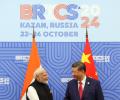
'Don't play the American game... India is too big for a US game.'
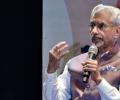
India's External Affairs Minister S Jaishankar has expressed concern over information regarding USAID funding in India, calling it "concerning" and hinting at potential "bad faith" activities. Jaishankar asserted that India is looking into the matter and that the country should know who is involved in such activities. He also emphasized the need to expand India's security definition in the digital age, highlighting the influence of technology and narratives on public perception. The statements come amid controversy surrounding USAID funding for certain activities in India, with the US President Donald Trump questioning the agency's funding of voter turnout efforts.

The government on Tuesday announced setting up of hubs to promote exports through e-commerce medium in public-private-partnership (PPP) mode and initially 10-15 hubs will be established. Finance Minister Nirmala Sitharaman said that these hubs, under a seamless regulatory and logistic framework, will facilitate trade and export-related services under one roof. "To enable MSMEs (micro, small and medium enterprises) and traditional artisans to sell their products in international markets, e-commerce export hubs will be set up in PPP mode," she said.
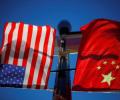
China on Tuesday retaliated US President Donald Trump's imposition of 2nd round of ten per cent tariffs on its export by slapping an additional 15 per cent tariffs on American goods and initiated legal action against Washington in WTO while leaving the door open for talks to address each other's concerns.

The Department for Promotion of Industry and Internal Trade (DPIIT), under the Ministry of Commerce and Industry, has entered into a partnership with the Startup Policy Forum (SPF), a premier industry organisation representing India's leading new-age companies.
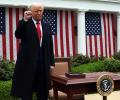
Here is a list of Q & As to explain these issues and implications of the US move.

The government is expediting visa-related issues to bring technicians to India from any country, not just China, as and when required, to ensure the smooth implementation of the flagship production-linked incentive (PLI) scheme aimed at boosting domestic manufacturing. "If those under the PLI scheme need to get their equipment installed, we try to expedite the ability to get technicians into India from any country, whichever it may be," Union Commerce and Industry Minister Piyush Goyal told Business Standard in an interview.

India has launched two special category visa for international students intending to pursue higher education in academic institutions in the country.
